
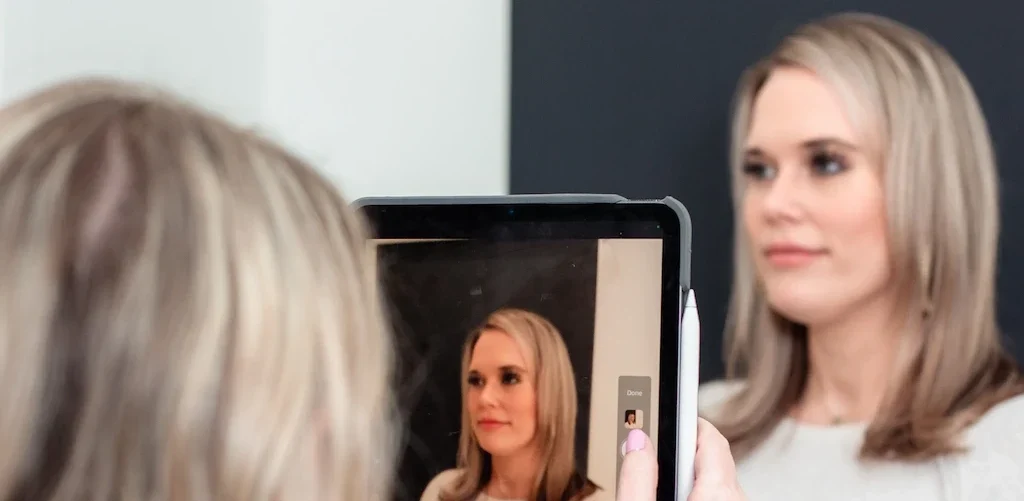
Earlobe repair is one of the most frequent procedures we perform at Synergy. Whether your earlobe tore from years of earring wear, stretched from heavy jewelry, or was intentionally gauged and you’re ready for a different look, Dr. Travis Shaw can restore a smooth, natural contour in a single in-office visit. Most patients are back to their normal routines the same day.
What Is Earlobe Repair?
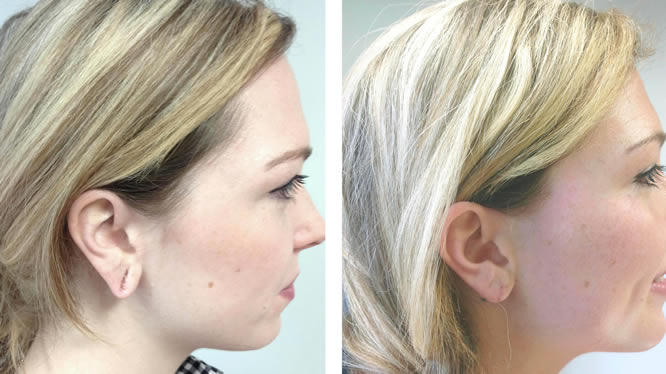
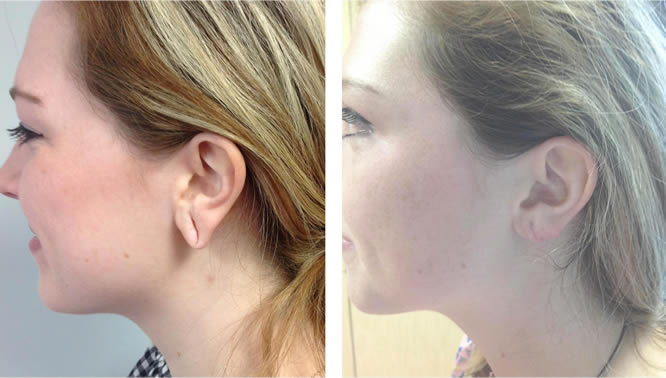
Earlobe repair is a minor surgical procedure that corrects damage to the earlobe caused by piercings, heavy earrings, trauma, or intentional stretching with gauges. Dr. Shaw removes damaged tissue, carefully realigns the edges of the earlobe, and closes the repair with precise suturing technique designed to minimize visible scarring.
The procedure is performed in our office under local anesthesia. Most repairs take under an hour from start to finish.
What Conditions Can Be Treated?
Earlobe repair can address a range of concerns, from minor damage to significant structural changes:
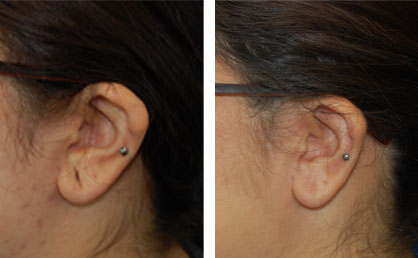
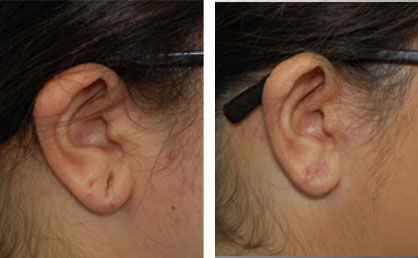
- Torn or split earlobes: from earrings being pulled, caught, or worn over many years until the hole gives way
- Elongated piercing holes: where the opening has gradually stretched and earrings sit too low or appear uneven
- Stretched earlobes: caused by heavy earrings worn consistently over time
- Gauged earlobes: where the tissue has been intentionally expanded and no longer closes on its own
Both partial tears, where the hole has elongated but hasn’t fully split, and complete splits can typically be repaired in a single session.
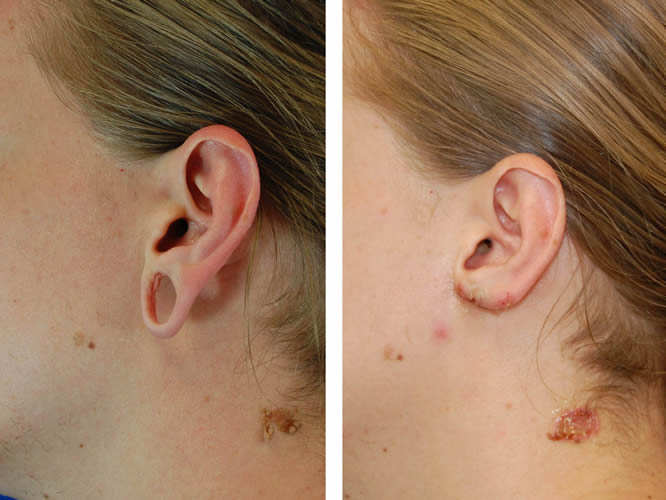
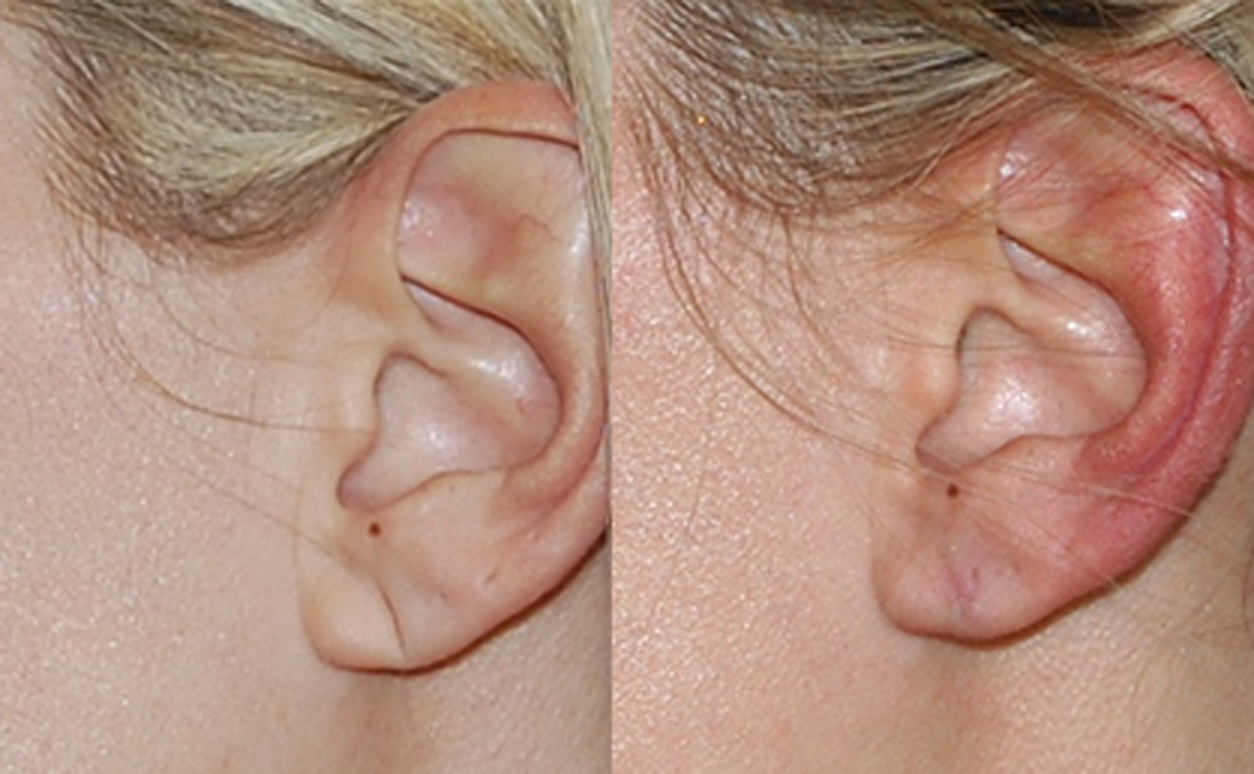
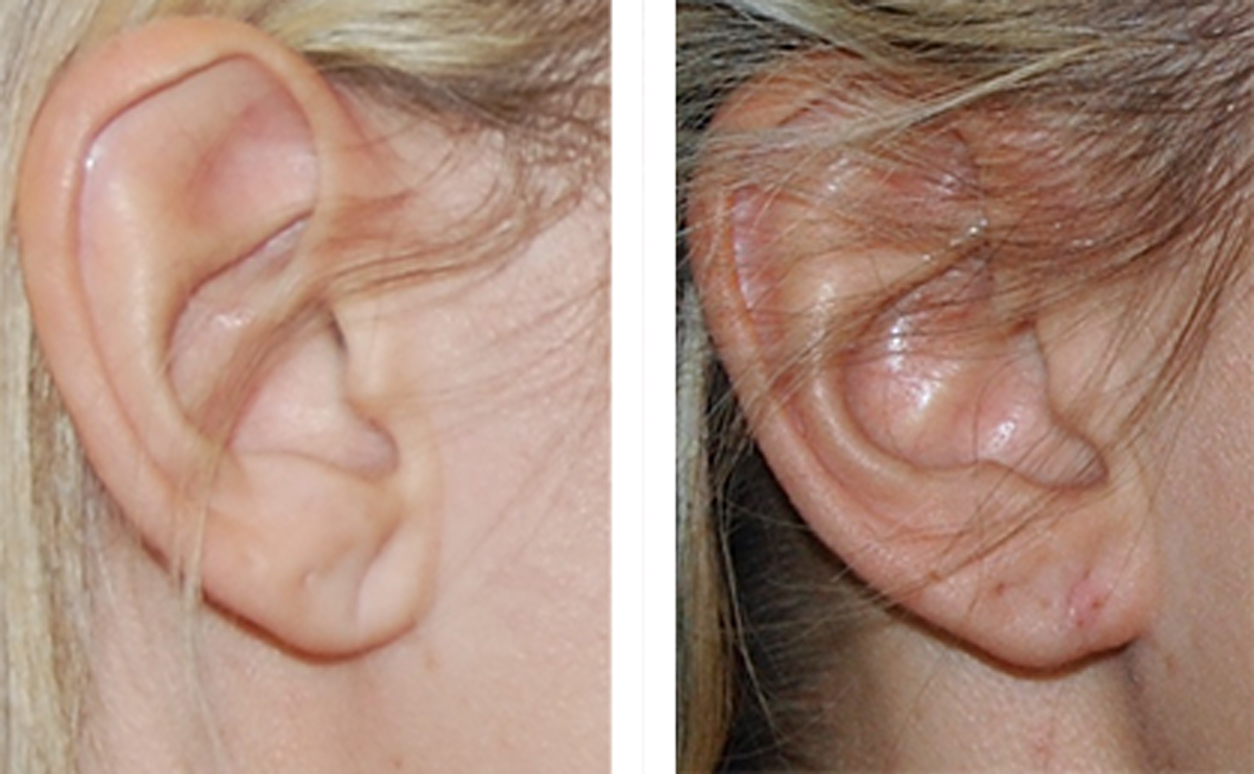
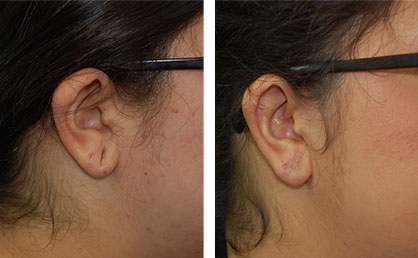
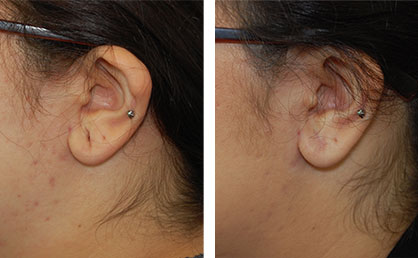
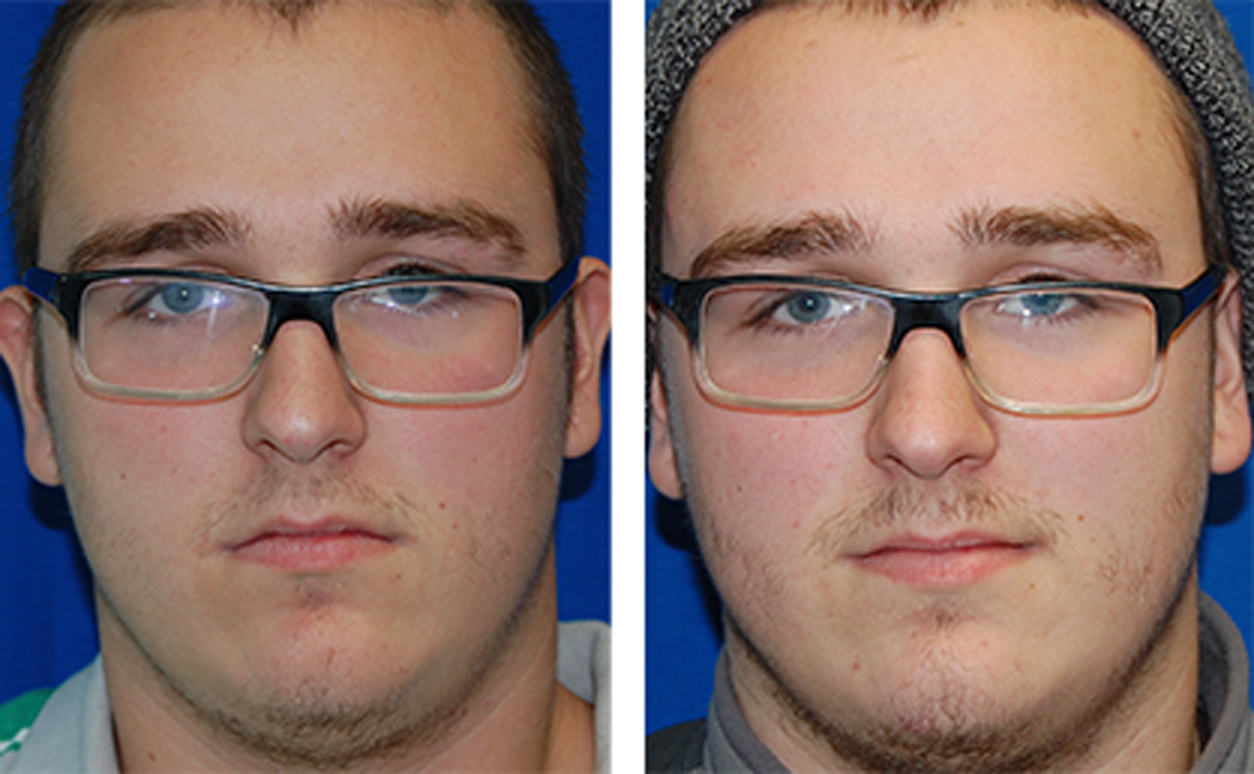
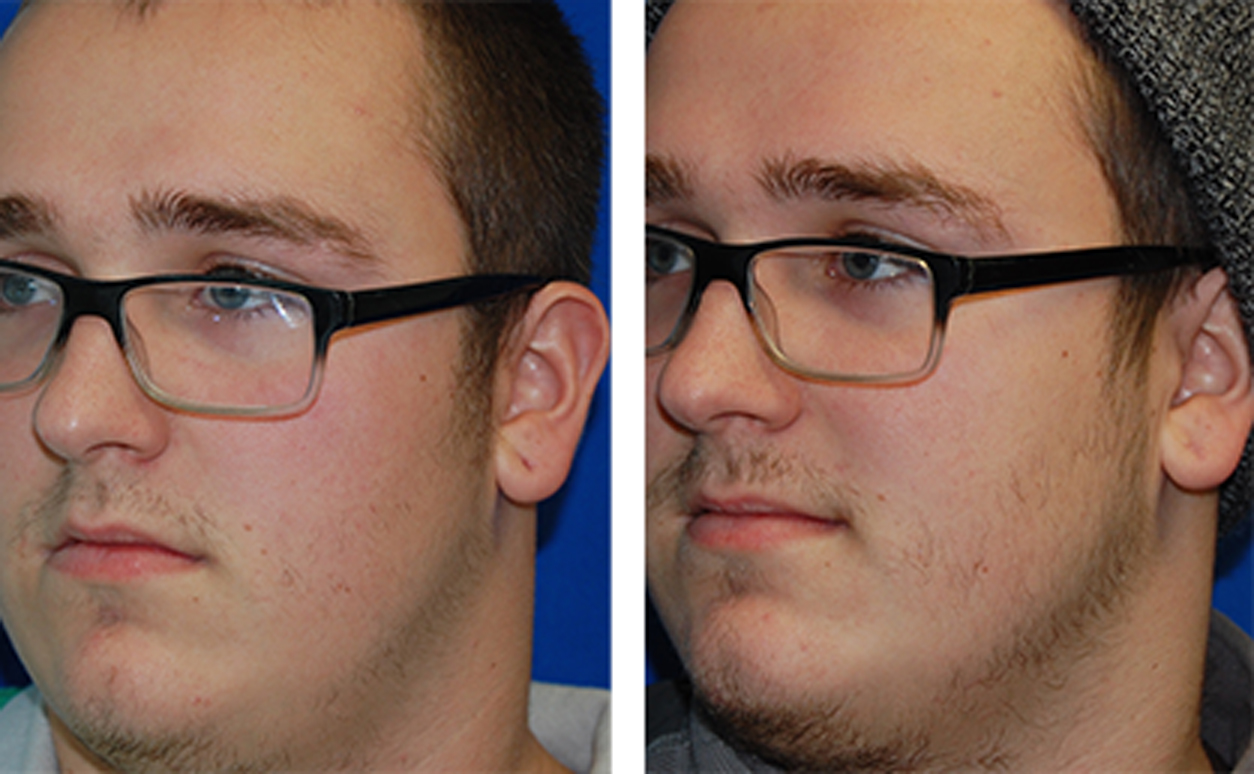
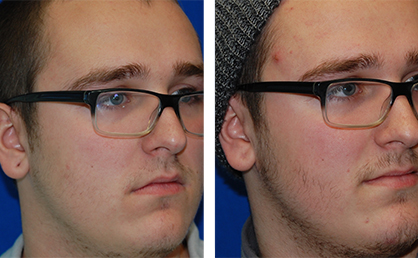
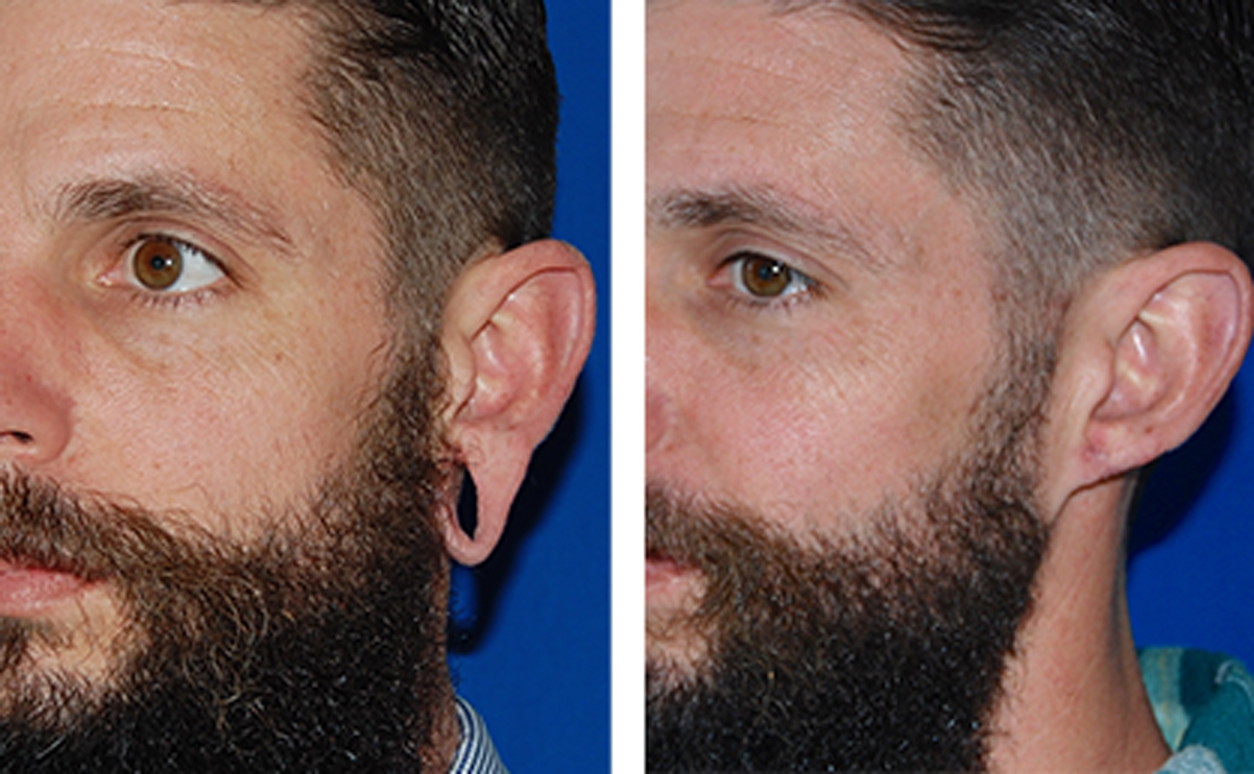
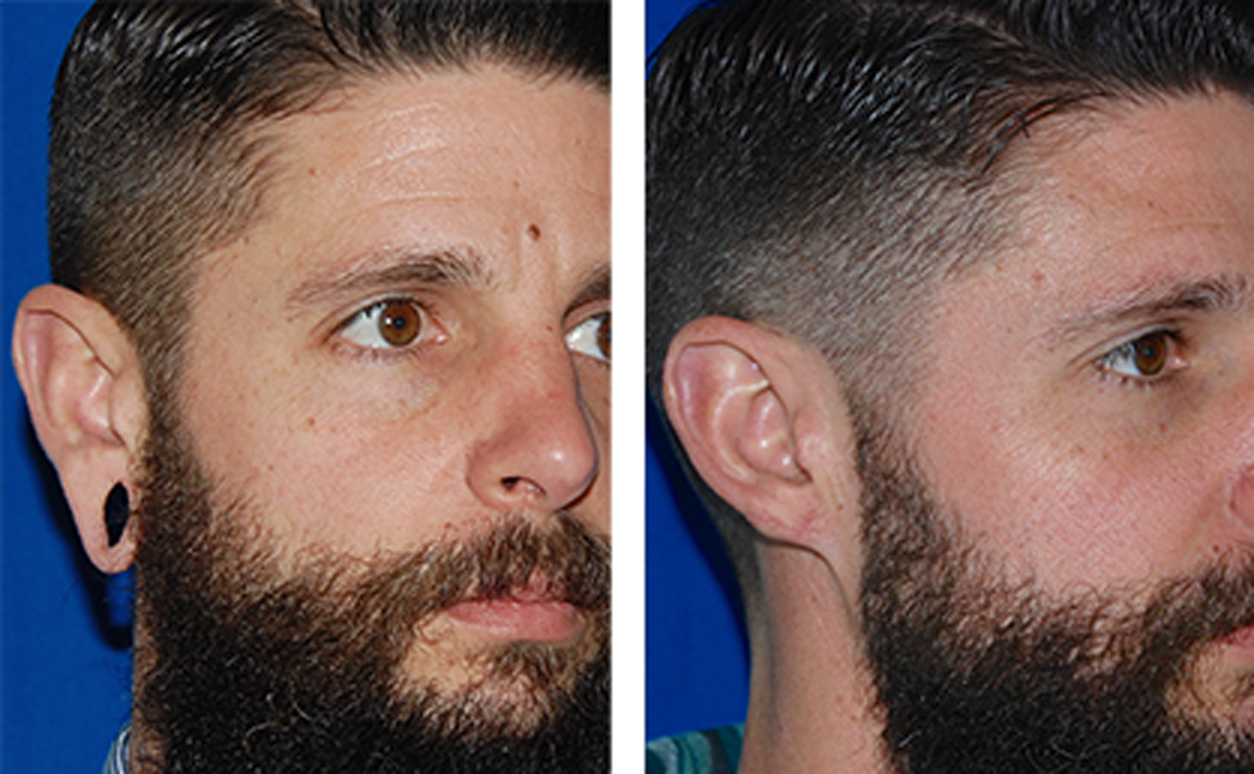
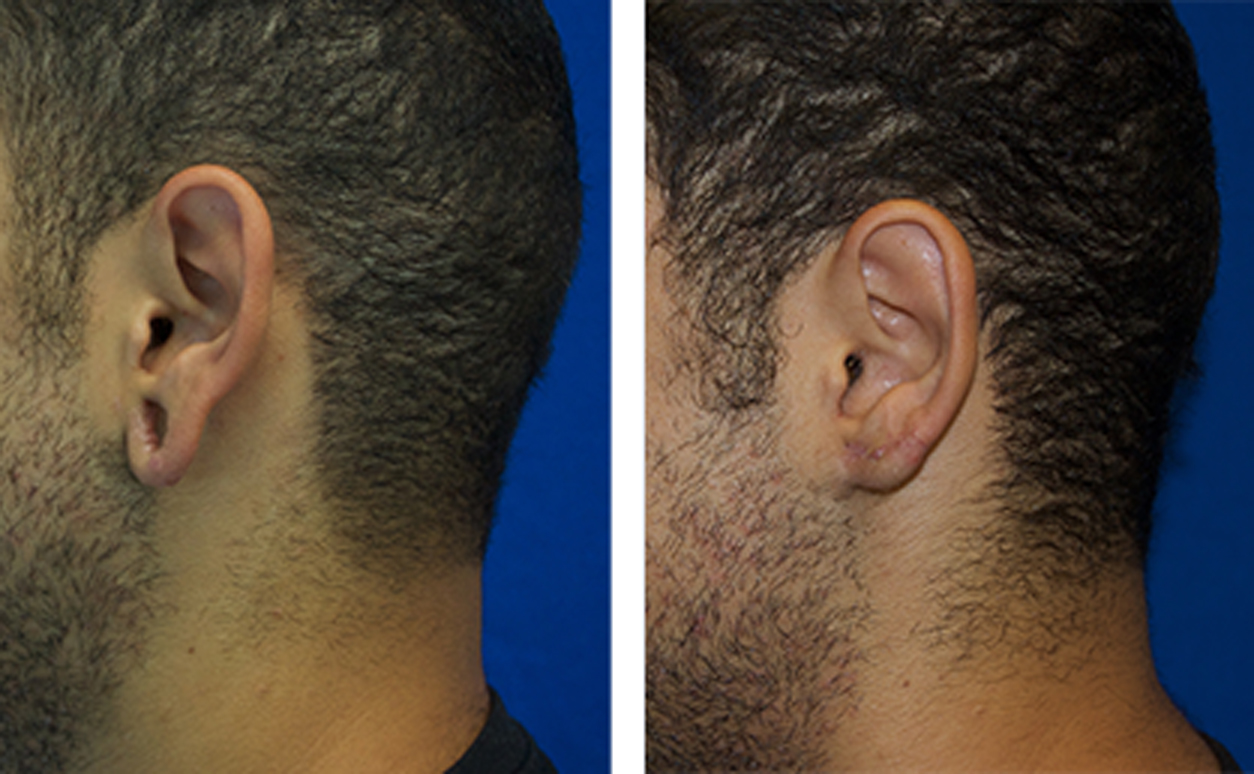
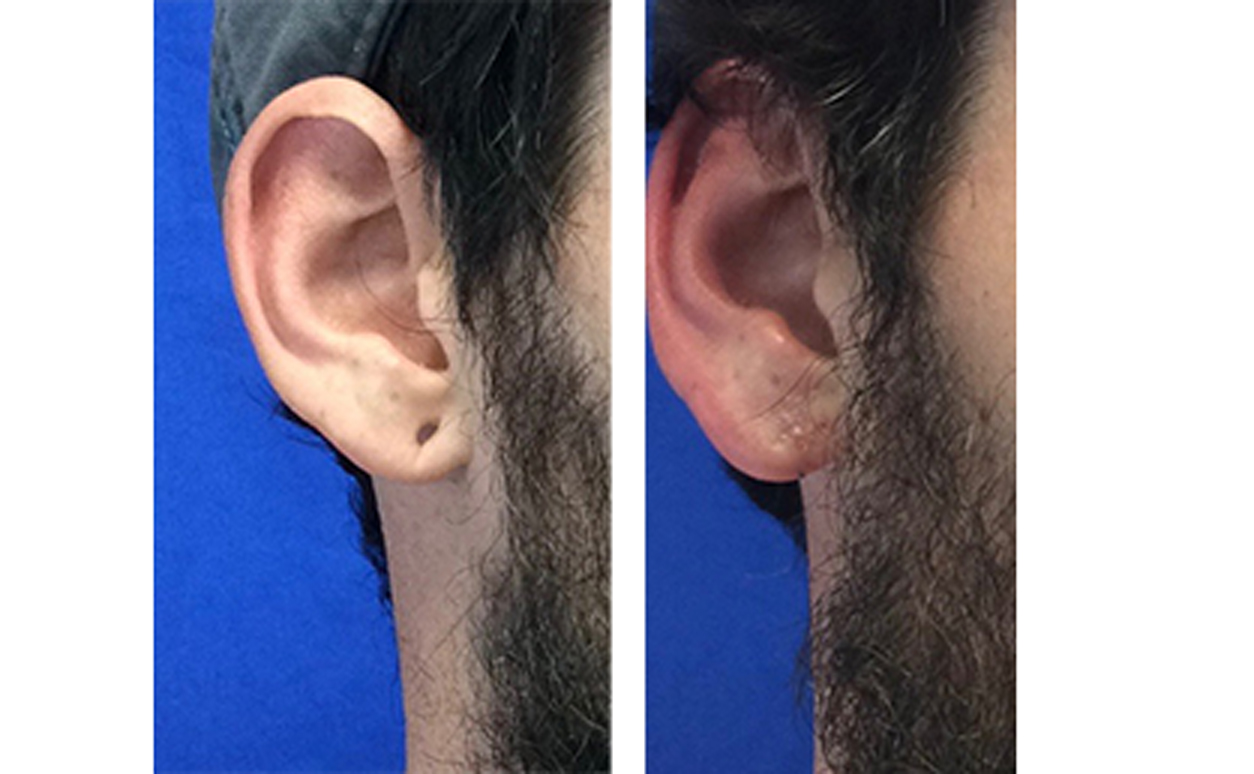
Earlobe Repair for Gauged Ears
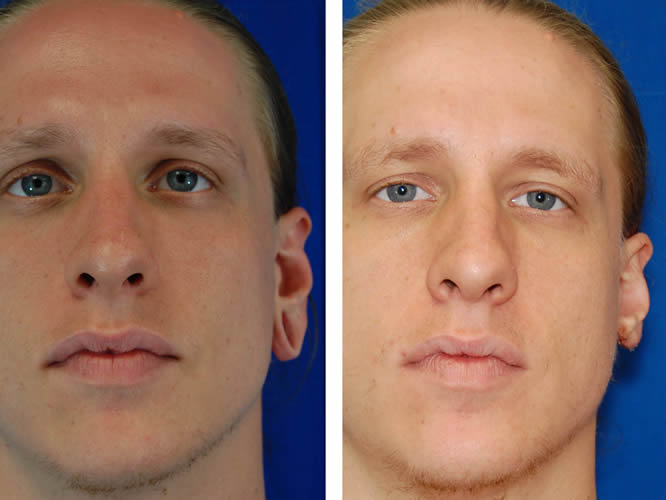
Gauged earlobe repair is more involved than repairing a torn or stretched lobe, and the right approach depends heavily on how large the gauge was and how much healthy tissue remains.
When a lobe has been gauged, the skin around the opening has been gradually stretched over time. At smaller gauge sizes, such as 10g or 8g, there’s usually enough elastic tissue remaining that the opening can be excised and closed cleanly in a single procedure. As gauge sizes increase, the tissue becomes thinner and more compromised. At larger sizes, typically 0g and above, the lobe may not have enough remaining tissue to reconstruct fully in one session, and Dr. Shaw will be honest with you about what a single repair can realistically achieve.
The repair itself involves removing the stretched channel of skin that formed around the gauge, then reshaping the remaining tissue to rebuild a rounded, natural-looking lobe. Sutures are placed carefully so the resulting scar sits along the lower edge of the lobe, where it becomes less visible as healing progresses.
Recovery after gauged earlobe repair follows a similar timeline to other earlobe repairs: sutures out at one to two weeks, most of the visible healing done within a few months.
If you’re unsure whether your gauge size is repairable, that’s exactly what the consultation is for. Dr. Shaw will assess the tissue, walk you through what the repair would involve, and give you a realistic picture of the outcome before you commit to anything.
What to Expect During the Procedure
Earlobe repair is done entirely in our office, with no hospital or surgical center required.
After the area is numbed with a local anesthetic, Dr. Shaw removes any damaged or uneven tissue and closes the repair with fine sutures placed to keep the lobe smooth and proportional. You’ll be awake and comfortable throughout. The procedure typically takes 30 to 60 minutes depending on the complexity of the repair.
You can drive yourself home afterward and most patients return to normal activity the same day or the following morning.

Recovery
Earlobe repair has a straightforward recovery. In the first few days, you may notice mild swelling or tenderness at the repair site. Sutures are typically removed at a follow-up visit one to two weeks after the procedure.
The scar will continue to soften and fade over the following months. Most patients are happy with their results well before the healing process is fully complete.
Before you leave, you’ll receive specific aftercare instructions from Dr. Shaw’s team covering how to care for the site, what to watch for, and when to follow up.
Re-Piercing After Earlobe Repair
Re-piercing is possible after the earlobe has fully healed, though timing matters. Piercing too soon increases the risk of tearing again.
Most patients are ready to re-pierce several months after repair, though the exact timeline depends on how the tissue healed and the size of the original repair. Dr. Shaw will advise you on appropriate timing and placement — typically away from the repaired area to protect the site and reduce the chance of recurrence.
How Much Does Earlobe Repair Cost?
Earlobe repair is considered a cosmetic procedure and is not covered by insurance in most cases. Cost varies depending on the complexity of the repair — a simple torn earlobe requires less work than reconstruction after significant gauging.
Pricing is discussed during your consultation. If you’re repairing both earlobes, that’s factored into the quote as well.
Why Choose Dr. Shaw in Richmond and Midlothian?
Earlobe repair is often offered as a quick, low-complexity add-on at med spas and piercing studios — and for the simplest cases, the results can be fine. But it’s still a surgical procedure. The outcome depends on how tissue is handled, how sutures are placed, and how the closure is planned to minimize visible scarring.
Dr. Travis Shaw is a double board-certified facial plastic surgeon, which means his training is specifically oriented around the structures of the face, ear, and neck, which includes the anatomy, tissue behavior, and healing characteristics that determine how well an earlobe repair holds up. He performs earlobe repairs personally, not as a task delegated to support staff, and approaches each one with the same attention to detail he brings to more complex facial procedures.
For patients who want a repair that heals cleanly, looks natural, and lasts, that distinction is worth considering.
Synergy has two locations serving Richmond and Midlothian, Virginia.

Frequently Asked Questions
Does a split earlobe heal on its own?
No. Once a piercing hole has torn through or elongated significantly, the tissue won’t reattach or tighten on its own. The skin edges of a split lobe actually heal over individually, which is why the repair involves refreshing those edges before closing — you’re essentially creating a clean wound that can knit back together properly. Leaving it alone won’t make it worse, but it won’t improve either.
Is earlobe repair covered by insurance?
In most cases, no. Earlobe repair is classified as cosmetic, which puts it outside the scope of standard health insurance coverage. If your earlobe was acutely torn — caught on something and ripped rather than gradually stretched — there may be a case for coverage under your specific plan, but it’s not guaranteed and worth confirming directly with your insurer before your appointment.
How long does earlobe repair last?
The repair is permanent in the sense that the tissue is excised and sutured closed — it doesn’t reverse over time. What can happen is re-tearing if the lobe is re-pierced in the same location or subjected to the same stress that caused the original damage. That’s why we discuss re-piercing placement and aftercare before you leave, so the repair holds up long-term.
Can both earlobes be repaired at the same time?
Yes, and most patients who need bilateral repair prefer to do both in one visit rather than two. The procedure time increases but you’re only going through the local anesthesia and recovery once.
How visible is the scar after earlobe repair?
Earlobe skin heals particularly well compared to most other areas of the face. It has a strong blood supply, which supports faster and cleaner healing, and the tissue is forgiving enough that fine sutures can be placed precisely without tension. The resulting scar is typically a thin line along the lower edge of the lobe. It will be most noticeable in the first few weeks, then progressively soften and flatten over three to six months. For the majority of patients, the scar is not something others notice in conversation.
What size gauge can be repaired?
Most gauge sizes can be addressed, but outcomes vary with size. Smaller gauges — generally up to about 0g — tend to have enough remaining tissue for a clean single-stage repair with predictable results. Larger gauges, particularly at 00g and beyond, present more of a reconstruction challenge because there’s less tissue to work with. In some cases, the result is very good; in others, it’s an improvement but not a complete restoration. Dr. Shaw will tell you plainly what’s achievable at your consultation rather than oversell the outcome.
Why shouldn’t I just have this done at a regular piercing studio or med spa?
Some studios offer earlobe repair as a piercing service, and some med spas offer it as a quick add-on. For simple elongated holes, that may be adequate. For complete tears, gauged reconstruction, or any repair where symmetry and scar placement matter, the skill set involved is surgical — tissue handling, suture technique, and wound closure planning are not the same as piercing or aesthetic injection work. Having a board-certified surgeon perform the repair means you have someone who can manage the tissue properly and course-correct if healing doesn’t go as expected.