
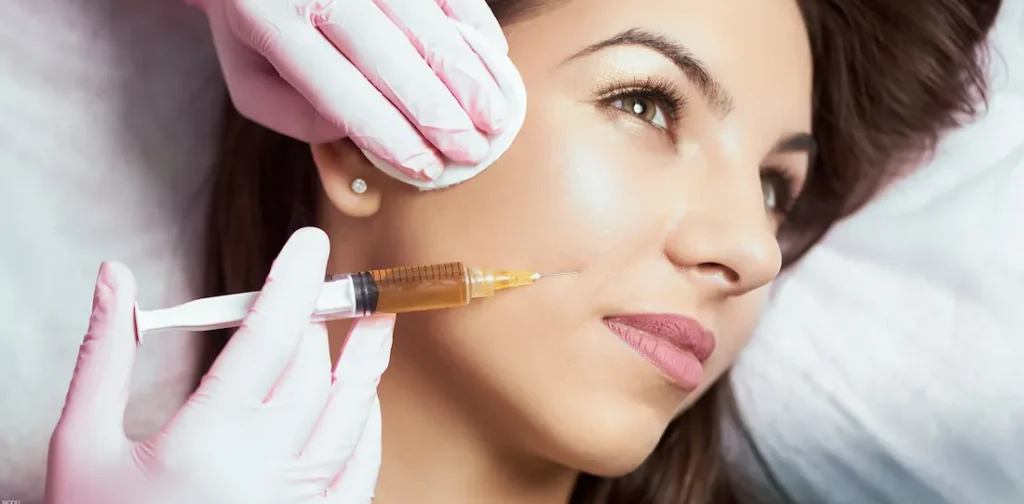
Injectables fall into two families: neurotoxins (Botox®, Dysport®) that soften movement lines, and hyaluronic acid (HA) fillers (Juvéderm®, Restylane®) that add or restore volume. Below, we break down how each brand differs in feel, spread, onset, typical uses, and how long results last—so you can choose the right option for your goals.
Neurotoxins: Botox vs. Dysport
Both use botulinum toxin type A to temporarily relax specific muscles that cause expression lines (forehead, “11s,” crow’s feet). Results are not permanent and typically require maintenance every few months.
Botox
The most famous neurotoxin, Botox is a quick, common procedure used to treat crow’s feet, forehead lines, laugh lines, and other signs of aging.
- What it is: A botulinum toxin type A injectable that relaxes tiny facial muscles to soften expression lines.
- Where it’s used: Forehead lines, “11s” (glabella), crow’s feet; also for brow shaping, bunny lines, lip flip, masseter slimming (select cases).
- What to expect: Results begin in 3–7 days, peak around 2 weeks, and typically last 3–4 months. No downtime beyond small pinpricks for a few hours.
- Look/feel: Precise placement; when dosed well, you look like you—just smoother.


How Botox differs from Dysport
- Tends to stay a bit more concentrated where it’s placed, which can help with very precise shaping (e.g., tiny brow tweaks).
- Onset can be a touch slower on average (3–7 days vs. 2–3 for many Dysport users).
- Units are not 1:1 with Dysport (dose numbers won’t match).
Dysport
Similar to Botox, Dysport is a lesser-known neurotoxin that offers temporary improvement in the appearance of moderate to severe wrinkles. Like Botox, the treatment is injected directly into the target facial area to prevent muscle contraction.
- What it is: A botulinum toxin type A injectable with similar goals—relax movement lines.
- Where it’s used: Forehead, glabella, crow’s feet; often chosen for slightly broader treatment zones.
- What to expect: Noticeable softening in 2–3 days for many patients, peak at ~2 weeks, and 3–4 months of effect. Minimal downtime.
- Look/feel: Can spread a touch more, which may suit wider areas.
How Dysport differs from Botox
- Often kicks in faster for many patients.
- Can spread a touch more, which may suit larger areas; less ideal when ultra-precise boundaries are needed.
- Units differ from Botox (not interchangeable).
HA Fillers: Juvéderm vs. Restylane
Unlike Neurotoxins that freeze the treated area, injectable fillers smooth out the treated area by filling in the skin. The active ingredient found in dermal fillers is hyaluronic acid (HA), which is a substance that is naturally found in the skin. Hyaluronic acid has the ability to store moisture and gives skin that plump, hydrated look. As you age, your body loses the hyaluronic acid found naturally in the body: although you may see this ingredient listed in some of your favorite skincare products, topical application can only moisturize.
Injected, however, it can restore plumpness and replenish your body’s natural production of hyaluronic acid. One injection can last up to a year and will add volume and decrease wrinkles depending on the injection site.*
Juvéderm
Juvederm can be used to treat moderate to severe facial wrinkles and folds, and can also be used for lip augmentation.
- What it is: Hyaluronic acid gel fillers that restore or add volume; reversible with hyaluronidase if needed.
- Where it’s used: Lips, cheeks, nasolabial folds, marionette lines, chin, jawline; select under-eye candidates.
- How long it lasts: Typically 6–12+ months, longer in low-movement areas (e.g., cheeks/jaw) and shorter in high-movement areas (e.g., lips).
- Downtime: Mild swelling/bruising for 1–3 days for most areas.
How Juvederm differs from Restylane
- Many Juvéderm options tend to hold a smoother, “plusher” finish—useful when a soft, juicy look is desired (e.g., certain lip goals).
Restylane
Similarly, the Restylane line of products is formulated to act like your body’s own naturally occurring hyaluronic acid and restore volume to your skin or add plumpness to the lips.
- What it is: Hyaluronic acid gel fillers; also reversible with hyaluronidase.
- Where it’s used: Similar zones—lips, folds, cheeks, chin, jawline; select tear-trough cases with the correct product and candidate.
- What to expect: Immediate improvement with swelling 1–3 days (lips may swell longer). Longevity 6–12+ months depending on product/area.
- Look/feel: Many Restylane gels are tuned for natural movement and slightly less water attraction, with options that flex with expression.


How Restylane differs from Juvéderm
- Many Restylane gels tend to give crisper edges and controlled definition with less early puffiness for some patients—helpful for lip borders, nasolabial definition, or areas that move a lot.
If you’re curious about incorporating injectables into your routine, give us a call. During the month of February only we’re offering special promotions on our fillers and Botox. Let’s talk through all your aesthetic goals: (804) 775-4559.
