
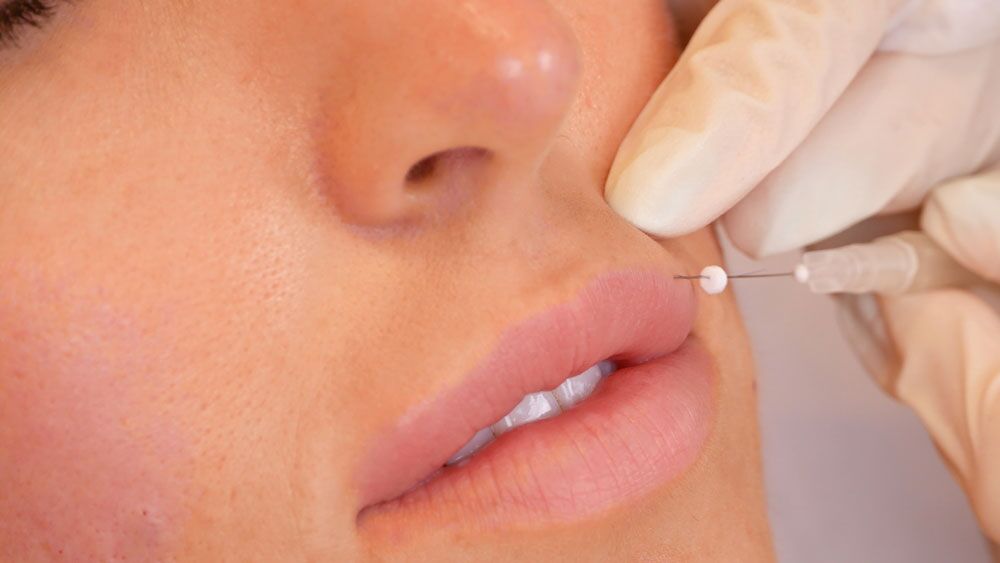
Lip filler is one of my favorite treatments because small, precise changes can make a big difference in how you feel when you smile. Some patients want a soft, hydrated look. Others want more shape or noticeable volume. My job is to match the plan to your anatomy and your taste, not to chase a trend.
This guide covers everything I walk patients through before, during, and after treatment, including the questions I hear most often.
What is Lip Filler?
Lip filler is a series of small injections that add volume, shape, and hydration to your lips. The fillers I use are made of hyaluronic acid (HA), a water-attracting gel that your body already produces naturally. Because HA is biocompatible, your body recognizes it and gradually metabolizes it over time. It is not permanent.
HA attracts and holds water in the tissue, which is why lips look smoother, fuller, and softer after treatment. Beyond adding volume, filler can also soften vertical lip lines, refine the Cupid’s bow, and correct subtle asymmetry.
What Is Lip Filler Made Of?
The short answer: hyaluronic acid gel, cross-linked to control how long it lasts, and most formulas include lidocaine (a local anesthetic) to improve comfort during injection.
What I use: HA fillers from families like Juvéderm (Ultra, Ultra Plus, Volbella), and Restylane (Kysse, Defyne/Refyne). Each has a different feel and lift, so I match the product to your lip tissue and goals.


How I Choose the Right Product for Your Lips
Every filler has a different feel and function. Some build structure, some add soft plump, some focus on hydration and fine lines. I match the product to what your lips actually need.
Volume and structure: Juvéderm Ultra XC is a reliable workhorse for adding definition and lift.
Fuller, faster plump: Juvéderm Ultra Plus or Restylane Defyne can deliver more volume in one session.
Subtle hydration or lip lines: Volbella is soft and flexible, which makes it well suited for vertical lip lines or patients who want a barely-there result.
Brand matters less than fit. When I assess your lips, I am looking at tissue thickness, elasticity, the vermilion border, Cupid’s bow anatomy, and how your lips move when you talk and smile.
“Natural” vs. “Kylie”: Both Are Possible, But We Build Gradually
You can absolutely ask for subtle or noticeably fuller. What changes is the pace, not the destination.
I do not place multiple syringes at once. It is not safe and it does not produce the best result. A typical first session is up to 1 mL. We reassess at two weeks once swelling has settled, and if you want more volume, we stage additional filler 4 to 6 weeks apart. This approach keeps the lips soft, avoids migration, and gives you control over where we land.
What to Expect on Treatment Day
Numbing: I apply a topical anesthetic for about 10 minutes before we begin. The filler itself contains lidocaine, so comfort tends to improve as the appointment goes on.
Technique: I place small amounts of product precisely where they will make the most difference, typically along the border, the body of the lip, and the columns. Depending on your anatomy, I may use a needle or a cannula.
Sensation: Most patients describe it as pressure and quick pinches. Not fun, but very tolerable. The appointment itself is usually 15 to 30 minutes.
Amount: Up to 1 mL for a first session is typical.

Lip Filler Healing: What Happens Day by Day
This is the section I wish more people read before their appointment. Healing follows a predictable pattern, and knowing what to expect prevents a lot of unnecessary worry.
Day 1 (0 to 24 hours): Peak Swelling
Your lips will look bigger than the final result, sometimes significantly so. This is normal. Swelling peaks in the first 24 hours. Some bruising may appear, and the lips may feel firm or tender to the touch.
What helps: Apply ice in 10-minute on / 10-minute off cycles throughout the day. Keep your head slightly elevated when you sleep.
Days 2 to 3: Swelling and Possible Bruising
Swelling may still be significant, and bruising can become more visible on days two and three before it starts to fade. Lips may look uneven or lumpy during this window. That is the swelling, not the final placement of the filler.
Lips can also feel hard or firm during this stage. This is also normal. The filler integrates with your tissue over the following days and weeks.
Days 4 to 7: Things Start to Soften
Swelling begins to resolve noticeably. Bruising, if present, typically fades within 10 to 14 days and can be covered with lip color. The lips start to feel more natural.
Some patients notice their lips feel dry or that the skin is peeling slightly around this time. This is a normal part of healing. A thin layer of Aquaphor or Vaseline can help.
Two Weeks: Settled Result
At around two weeks, the swelling is fully resolved and the filler has integrated into the tissue. This is what your lips actually look like. If you want to reassess or add volume, two weeks is the right time to do it.
Call the office urgently if you experience: severe pain, skin that turns white or develops a bluish discoloration, or any significant change in skin color around the injection site. These are signs of a vascular complication and require prompt attention.
Lip Filler Aftercare
Here is what I tell every patient before they leave:
Moisturizer: A thin layer of Aquaphor or Vaseline is completely safe and encouraged if your lips feel dry. Both are fine to use immediately after treatment.
Straws and heavy puckering: Avoid for 24 to 48 hours. Strong suction can shift filler before it has had time to settle.
Lipstick and lip gloss: Skip for the first 24 hours, then resume with clean products.
Exercise, sauna, hot yoga: Hold for 24 hours. Heat increases swelling.
Alcohol and salty or spicy foods: Avoid the first night. Both can worsen swelling.
Sleep position: Head slightly elevated the first night.
Icing: 10 minutes on / 10 minutes off during day one is helpful.
Massage: Do not massage unless I have specifically shown you how. Over-massaging moves product.
NSAIDs: Ibuprofen and aspirin increase bruising risk. Use only if your own doctor says it is appropriate, and do not stop any prescribed medications without guidance.
Bruising: How to Reduce Your Risk
Lips are highly vascular, so some bruising is always possible. Some patients never bruise; others bruise every time. Here is what actually helps reduce the risk:
Before your appointment:
- Avoid NSAIDs (aspirin, ibuprofen, Advil) and blood thinners for about 5 days prior. This includes fish oil and alcohol.
- Some patients find Arnica tablets taken for 2 days before and pineapple the day before helpful, though evidence is anecdotal.
If you do bruise: It typically resolves within two weeks and can be covered with lip color.
Timing tip: Do not schedule your appointment within two weeks of a major event.
Frequently Asked Questions
How long does lip filler last?
Most hyaluronic acid lip fillers last 6 to 12 months. First-time patients sometimes metabolize it a bit faster as the tissue adjusts. I typically plan a touch-up around 9 to 12 months. If you go longer between sessions, you will likely be starting close to baseline.
Does lip filler hurt?
You will feel pressure and quick pinches. I numb for about 10 minutes before we start, and because most fillers contain lidocaine, the discomfort tends to decrease as the appointment continues. Most patients rate it as manageable, not painful.
Can I use Aquaphor or Vaseline after lip filler?
Yes. A thin layer of either is safe immediately after treatment and throughout healing. Both help with dryness and peeling, which are common in the first week.
Why do my lips feel hard after filler?
Firmness in the first few days is normal. The filler is integrating with your tissue, and swelling adds to that sensation. Lips typically soften significantly by the end of the first week and feel natural by two weeks.
Why are my lips peeling or dry after filler?
Mild peeling and dryness in days three through seven are a normal part of healing. Keep lips moisturized with Aquaphor or Vaseline. Avoid exfoliating or picking at the skin.
What is the difference between a lip flip and lip filler?
A lip flip uses a small amount of Botox to relax the muscle along the upper lip, which causes it to roll slightly outward. It does not add volume. It can create the appearance of a fuller upper lip, but the effect is subtle and lasts about 8 to 12 weeks. Lip filler adds actual volume and shape and lasts much longer. Many patients combine both: filler for volume, a lip flip for softness and curl.
How much filler is in one syringe?
One syringe contains 1 mL of filler. For a first treatment, 1 mL is the standard amount. Some patients are very happy with half a syringe, particularly if they want a subtle result or have naturally full lips. For patients building toward more volume, we stage additional syringes over time.
When can I use a straw after lip filler?
After 48 hours. The restriction exists because strong suction in the first day or two can shift filler before it has settled. After that, straws are fine.
When can I exercise after lip filler?
I ask patients to avoid exercise, hot yoga, and saunas for 24 hours. Elevated heart rate and heat increase swelling. After 24 hours, normal activity is fine.
Can lip filler migrate?
Migration happens when filler moves outside the intended treatment area, usually above the vermilion border. It is more common when large amounts are placed at once, which is one reason I do not stack multiple syringes in a single session. Proper technique and conservative volume placement minimize the risk significantly.
WHAT NEXT?
I hope you have found this information helpful! I offer consultations, which can be scheduled by calling Frequently Asked Questions
How long does lip filler last?
Most hyaluronic acid lip fillers last 6 to 12 months. First-time patients sometimes metabolize it a bit faster as the tissue adjusts. I typically plan a touch-up around 9 to 12 months. If you go longer between sessions, you will likely be starting close to baseline.
Does lip filler hurt?
You will feel pressure and quick pinches. I numb for about 10 minutes before we start, and because most fillers contain lidocaine, the discomfort tends to decrease as the appointment continues. Most patients rate it as manageable, not painful.
Can I use Aquaphor or Vaseline after lip filler?
Yes. A thin layer of either is safe immediately after treatment and throughout healing. Both help with dryness and peeling, which are common in the first week.
Why do my lips feel hard after filler?
Firmness in the first few days is normal. The filler is integrating with your tissue, and swelling adds to that sensation. Lips typically soften significantly by the end of the first week and feel natural by two weeks.
Why are my lips peeling or dry after filler?
Mild peeling and dryness in days three through seven are a normal part of healing. Keep lips moisturized with Aquaphor or Vaseline. Avoid exfoliating or picking at the skin.
What is the difference between a lip flip and lip filler?
A lip flip uses a small amount of Botox to relax the muscle along the upper lip, which causes it to roll slightly outward. It does not add volume. It can create the appearance of a fuller upper lip, but the effect is subtle and lasts about 8 to 12 weeks. Lip filler adds actual volume and shape and lasts much longer. Many patients combine both: filler for volume, a lip flip for softness and curl.
How much filler is in one syringe?
One syringe contains 1 mL of filler. For a first treatment, 1 mL is the standard amount. Some patients are very happy with half a syringe, particularly if they want a subtle result or have naturally full lips. For patients building toward more volume, we stage additional syringes over time.
When can I use a straw after lip filler?
After 48 hours. The restriction exists because strong suction in the first day or two can shift filler before it has settled. After that, straws are fine.
When can I exercise after lip filler?
I ask patients to avoid exercise, hot yoga, and saunas for 24 hours. Elevated heart rate and heat increase swelling. After 24 hours, normal activity is fine.
Can lip filler migrate?
Migration happens when filler moves outside the intended treatment area, usually above the vermilion border. It is more common when large amounts are placed at once, which is one reason I do not stack multiple syringes in a single session. Proper technique and conservative volume placement minimize the risk significantly.. I am so excited to get to know you and help you meet your aesthetic goals!
