
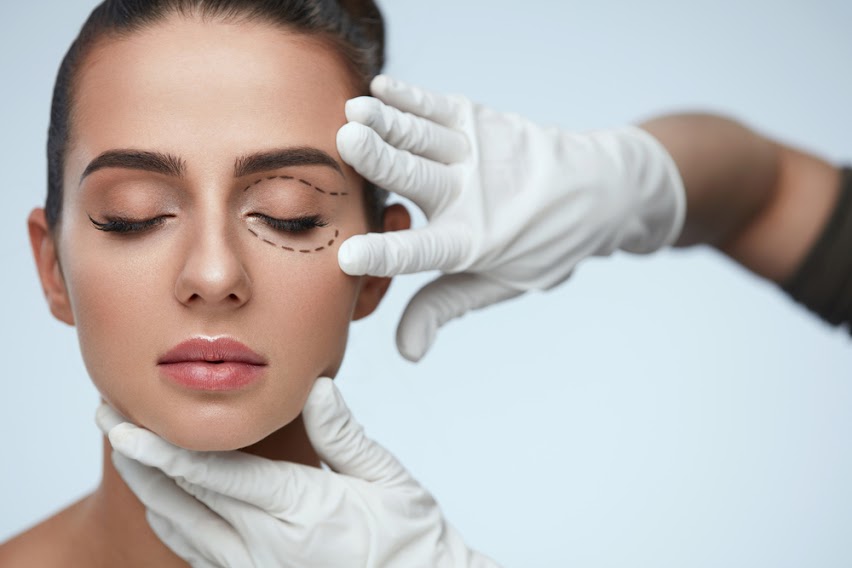
Thinking about changing what you see in the mirror? You’re not alone. The smartest first step is choosing the right surgeon—and that starts with the right questions. Use the four core questions below to ground your consult, then jump into the procedure-specific sections for rhinoplasty, eyelid surgery, chin implants, and septoplasty. We’ve kept this straightforward and practical so you can bring it to your appointment.
Qualifications & Safety
Exactly what to ask, what a good answer sounds like, how to verify it, and when to pause.
Ask These at Every Consultation
Are you board-certified by the American Board of Plastic Surgery (ABPS)?
Why it matters
ABPS is the only ABMS-recognized board for plastic surgery. It confirms that your doctor has accredited training plus written/oral exams focused on plastic-surgery safety and outcomes.
What a good answer sounds like
“Yes—ABPS certified since 20XX. Here’s my certificate; you can verify me on the ABPS or ABMS websites.”
Red flags
“Cosmetic board certified” without ABPS; reluctance to give full name for verification.
Where will my surgery be performed, and is the facility accredited?
Why it matters
Accredited centers are held to high standards for sterility, equipment, emergency medications, and protocols.
What a good answer sounds like
“Our OR is accredited by AAAHC/AAAASF/Joint Commission. Here’s the certificate and the most recent inspection date.”
Red flags
No accreditation; “we’re applying”; no written emergency plan or transfer agreement with a nearby hospital.
Do you have hospital privileges for this procedure?
Why it matters
Hospital privileges mean an independent committee reviewed the surgeon’s training and competence for that exact operation.
What a good answer sounds like
“Yes—active privileges at [Hospital Name] for rhinoplasty/blepharoplasty/chin implant/septoplasty.”
How to verify
Call the hospital’s medical staff office and ask whether privileges are current for the procedure you’re considering.
Red flags
Privileges only for unrelated procedures; evasive or non-specific responses.
Experience & Results
Ask about volume, technique, and proof of outcomes—matched to your anatomy and goals.
Key Questions to Ask
1How often do you perform this exact procedure—and on patients like me?
Why it matters
Recent, procedure-specific volume matters more than lifetime numbers. Even better is volume in patients who resemble you (age, skin thickness, anatomy, goals). That experience helps the surgeon anticipate nuances and reduces variability in outcomes.
What a good answer looks like
“In the last 12 months: ~X rhinoplasties / Y blepharoplasties / Z chin implants; many with your skin thickness/age/concerns.”
What to ask next
“For this procedure, what were your complication and revision rates over the last 12–24 months, and how do they compare with your own results from the previous 2–3 years? What are the most common reasons for revision in your practice?”
2 What technique will you use for me—and what trade-offs come with it?
Why it matters
Techniques have pros/cons (e.g., open vs closed rhinoplasty; fat reposition vs removal in lower lids; submental vs intraoral chin incisions).
What a good answer sounds like
Explains why a method fits your anatomy, what it won’t fix, and which side effects are likely (temporary numbness, swelling pattern, scar location).
Red flags
Buzzwords without anatomic reasoning; “this technique is always best.”
3 Can I see unretouched, case-matched before/after photos—and how do you take them?
Why it matters
Consistent, honest photos predict realistic results and set expectations.
What to look for
Same lighting, distance, background, and angles (front, oblique, profile), and no makeup for skin cases. Ask for similar age, sex, skin thickness, and goals.
Red flags
Filters, inconsistent angles, refusal to show cases like yours.
Recovery
Get clear milestones and a written revision plan so you can schedule life and avoid surprises.
What to Plan For
1 What does my week-by-week recovery look like?
Why it matters
Clear milestones help you plan work, family, travel, and exercise—and spot problems early.
What a good answer includes
- Day 0–3: expected swelling/bruising, pain plan, icing, sleeping position
- Week 1: tape/splint or suture removal, driving rules, screen time/eye strain limits
- Week 2–3: return to work/social events, makeup/contacts, sun protection
- Weeks 4–6: light → full exercise, travel, sauna/pool restrictions
- Months: when “final” results are expected for your procedure (e.g., rhinoplasty tip 6–12 months)
Red flags
“You’ll be fine in a couple days” for surgeries that typically take longer.
2 What’s your revision policy and timeline?
Why it matters
Some fine-tuning is part of surgical reality; a written policy prevents surprises.
What a good answer looks like
“We reassess at 3–6 months for eyelids/chin and 6–12 months for rhinoplasty. The surgeon fee may be reduced or waived; facility/anesthesia fees may still apply. Here it is in writing.”
Red flags
No written policy; promises of “perfection.”